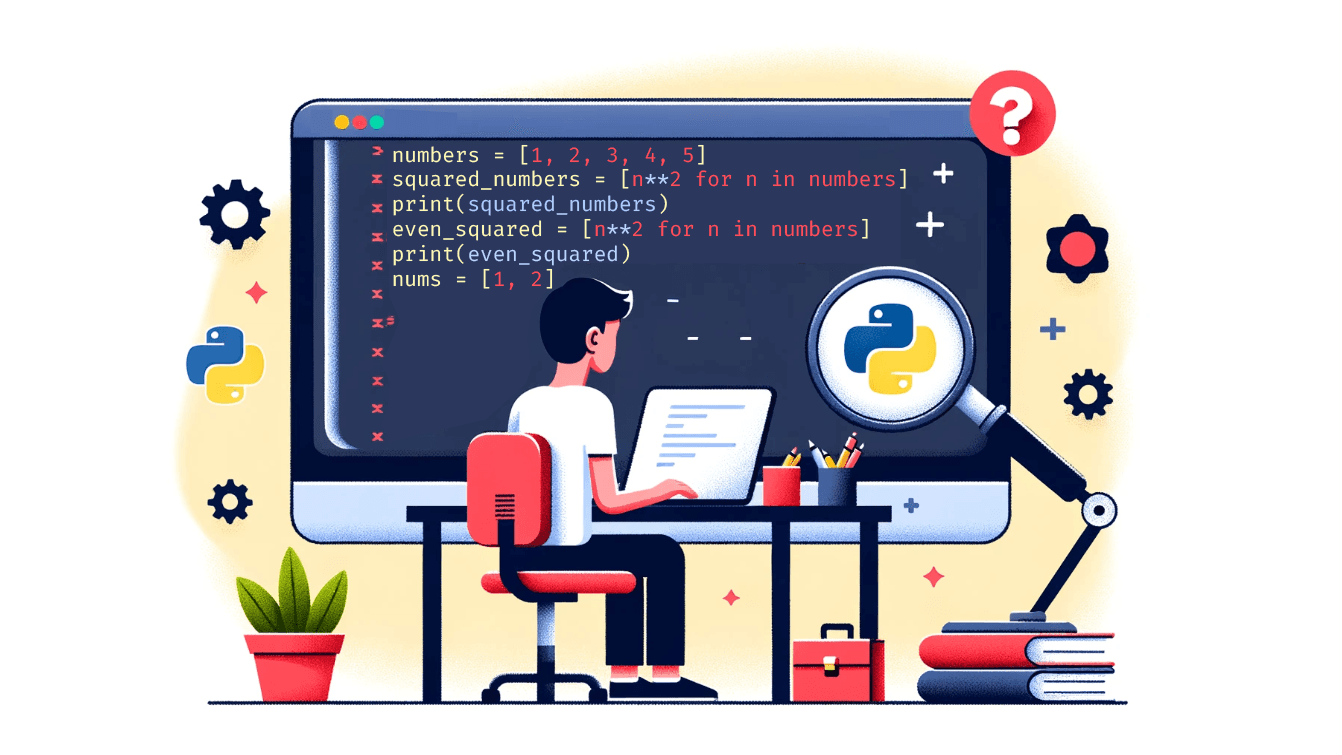
Demystifying Python: List Comprehension & Slicing
Mon Oct 30 2023
A lot of times in my job, you come across a need to implement a script or write an automation for something quickly. Python fills in this need a lot of times because it is easy to read and write, is very versatile and offers a wide range of features to make the life of a developer simpler. Two of these features that often intrigue beginners are list comprehensions and list slicing.
List Comprehension: A Pythonic Way to Create Lists
List comprehension provides a concise way to create lists in Python. If you come from a background of loops, this might seem magical at first!
Basic Syntax:
[expression for item in iterable if condition]Examples:
- Create a list of squares for numbers from 0 to 9:
squares = [x**2 for x in range(10)]
print(squares)
# Output: [0, 1, 4, 9, 16, 25, 36, 49, 64, 81]- List of even numbers using a condition:
evens = [x for x in range(10) if x % 2 == 0]
print(evens)
# Output: [0, 2, 4, 6, 8]Benefits:
- Concise: Fewer lines of code.
- Readable: Once familiar, it's easier to understand at a glance.
- Flexible: Can incorporate conditions and nested loops.
Slicing Lists: Extracting Portions of Lists
Python lists are versatile, and one of their powerful features is the ability to slice them. Slicing allows you to extract a portion of a list.
Basic Syntax:
list_name[start:stop:step]Examples:
- Extract the first three items:
my_list = [0, 1, 2, 3, 4, 5]
print(my_list[:3])
# Output: [0, 1, 2]- Extract the last three items:
print(my_list[-3:])
# Output: [3, 4, 5]- Extract items with a step of 2:
print(my_list[::2])
# Output: [0, 2, 4]Things to Remember:
- Negative Indexing: Negative numbers start from the end of the list.
- Omitted Indices: If you omit the start, it defaults to 0. Omitting the stop includes everything to the end of the list.
List comprehension and list slicing are two powerful tools in a Python developer's toolkit. While they might seem complex at first, with practice, they become second nature. They not only make your code more readable but also concise. So, the next time you're looping through lists or extracting segments from them, give these features a try!